
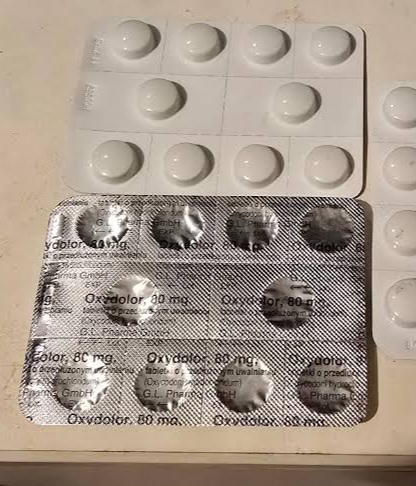


Description
What is Oxydolor 80mg ??
Oxydolor 80mg is a high-strength, prolonged-release formulation of oxycodone hydrochloride used for treating severe chronic pain, typically in cancer patients, requiring continuous around-the-clock opioid therapy. It is a potent analgesic that must be taken every 12 hours. It carries significant risks, including addiction, respiratory depression, and severe withdrawal symptoms in newborns if used during pregnancy.
Oxydolor comes in the form of extended-release tablets and contains the active ingredient oxycodone hydrochloride. Oxydolor is used to treat acute pain that requires treatment with opioid painkillers.
Composition oxydolor 80mg
The active substance is oxycodone hydrochloride.
1 film-coated tablet contains 80 mg of oxycodone hydrochloride, equivalent to 71.72 mg of oxycodone.
Excipients: Tablet core: Kollidon SR (polyvinyl acetate, povidone (K = 27.0 – 32.4), sodium lauryl sulfate, silica); Microcrystalline cellulose; Colloidal anhydrous silica; Magnesium stearate. Tablet coating: Polyvinyl alcohol; Talc (E 553b); Titanium dioxide (E171); Macrogol 3350; Soya lecithin (E 322); Iron oxide yellow (E 172); Iron oxide black (E172); Indigo carmine (E 132), lake.
Dosage oxydolor 80mg
Always use this medicine exactly as described in the package leaflet or as directed by your doctor or pharmacist. If you have any further questions, ask your doctor or pharmacist.
Your doctor will determine your individual dosage. Before you start treatment and regularly throughout your treatment, your doctor will discuss with you what to expect from taking Oxydolor, when and how long to take it, when to contact your doctor, and when to stop taking it.
This medication should be taken orally. The tablets should be swallowed whole with a glass of water. The tablets can be taken with or without food. They should be swallowed every 12 hours, according to a fixed schedule (e.g., at 8 a.m. and 8 p.m.).
The effect of the drug lasts for 12 hours.
Extended-release tablets must not be divided, broken, chewed, or crushed.
Action
Oxycodone is responsible for the drug’s analgesic effects. It is a strong painkiller that belongs to a group of drugs called opioids.
Indications
The drug is indicated for severe pain that can only be treated with opioid analgesics.
Contraindications
The drug should not be used in case of: hypersensitivity to any of the ingredients of the preparation; severe respiratory depression with hypoxia of organs and tissues and/or hypercapnia; severe chronic obstructive pulmonary disease; cor pulmonale; severe bronchial asthma; paralytic ileus not caused by opioids; moderate to severe hepatic impairment.
Side effects oxydolor 80mg
Like all medicines, this medicine can cause side effects, although not everybody gets them.
If you experience any of the following side effects, stop taking Oxydolor and contact your doctor immediately: Sudden difficulty breathing, swelling of the eyelids, face or lips, rash and itching of the skin, especially all over the body – these are symptoms of a serious allergic reaction; Slowed or weak breathing (respiratory depression). This is the most serious risk of medicines like Oxydolor (opioids) and can be fatal when used in high doses; Drop in blood pressure – this may cause dizziness and fainting; Constriction of the pupils, spasm of the bronchial muscles (leading to shortness of breath), suppression of the cough reflex.
Other possible side effects:
Very common side effects (may affect more than 1 in 10 people): sedation (tiredness to drowsiness) – this is most likely when you first start taking the tablets or if your dose is increased, but usually goes away after a few days; dizziness, headache; constipation, feeling sick (nausea), vomiting; itching.
More information in the leaflet provided with the medicine.
Warnings and precautions
You should tell your doctor if you: are elderly; are debilitated; have paralytic ileus caused by opioids; have kidney problems; have mild liver problems; have severe lung problems (e.g., reduced ability to breathe); have frequent breathing stops during sleep, which can cause daytime sleepiness (sleep apnea); have myxedema (a thyroid disorder characterized by dry, cold, and swollen skin covering the face and limbs); have an underactive thyroid; have adrenal gland problems (the adrenal glands do not work properly), for example Addison’s disease; have a mental illness accompanied by a (partial) loss of reality (psychosis), caused by intoxication with alcohol or other substances (substance-induced psychosis); have gallstones; have an enlarged prostate; have pancreatitis; have low blood pressure; have high blood pressure (hypertension); have heart problems; have a head injury (due to the risk of increased cranial pressure); have epilepsy or a tendency to seizures; are taking medicines called MAO inhibitors (used to treat depression or Parkinson’s disease), for example medicines containing tranylcypromine, phenelzine, isocarboxazid and moclobemide; are drowsy or have episodes of suddenly falling asleep.
Oxydolor is a medicine containing oxycodone, which is an opioid medicine. Repeated use of Oxydolor can lead to dependence, abuse, and addiction, which can lead to a life-threatening overdose.
Signs that you may be developing a dependence or addiction include: needing to take the medicine for longer than your doctor prescribed; needing a higher dose than recommended; using the medicine for reasons other than prescribed, for example, “to calm down” or “to help you sleep”; making repeated unsuccessful attempts to stop or reduce the use of the medicine; feeling bad when you stop taking the medicine and feeling better when you start taking it again (“withdrawal effects”).
If you notice any of these symptoms, contact your doctor.
You should inform your doctor about any planned surgery.
Drinking alcohol while taking Oxydolor may cause drowsiness or increase the risk of serious side effects, such as shallow breathing with a risk of stopping breathing and loss of consciousness. It is recommended to refrain from drinking alcohol while taking Oxydolor. Avoid drinking grapefruit juice while taking Oxydolor.
Keep the medicine out of the sight and reach of children, at a temperature below 25˚C.
Use of other medications
Please tell your doctor or pharmacist about all the medicines you are taking, have recently taken or might take, including medicines obtained without a prescription.
In particular, tell your doctor if you are taking: medicines called monoamine oxidase inhibitors (such as moclobemide, phenelzine, isoniazid, tranylcypromine or selegiline) or have taken this type of medicine in the last two weeks; medicines to help you sleep or calm you down (e.g. sleeping pills, tranquilisers, including bezodiazepines); medicines to treat depression (e.g. paroxetine or fluoxetine); medicines to treat mental or psychiatric disorders (e.g. phenothiazines or neuroleptics); other strong analgesics (opioids); muscle relaxants; quinidine (a medicine to treat a fast heartbeat); cimetidine (a medicine for stomach ulcers, indigestion or heartburn); medicines to treat fungal infections (such as ketoconazole, voriconazole, itraconazole or posaconazole). Medicines used to treat bacterial infections (such as clarithromycin, erythromycin or telithromycin); a special type of medicine known as a protease inhibitor for HIV (such as boceprevir, ritonavir, indinavir, nelfinavir or saquinavir); rifampicin used to treat tuberculosis; carbamazepine (a medicine used to treat seizures, epileptic convulsions and certain types of pain); phenytoin (a medicine used to treat epilepsy); a herbal medicine called St. John’s wort (also called Hypericum perforatum); medicines used to treat allergies (antihistamines) or vomiting (antiemetics); medicines used to treat Parkinson’s disease; coumarin-type anticoagulants (medicines used to reduce the risk of blood clots).
Pregnancy and breastfeeding
If you are pregnant or breast-feeding, think you may be pregnant or are planning to have a baby, ask your doctor or pharmacist for advice before taking this medicine.
Oxydolor should be avoided during pregnancy whenever possible. Breastfeeding should be discontinued while taking Oxydolor.
Use of the drug in children and adolescents
The medicine should not be used in children and adolescents under 12 years of age.
Driving and operating machinery
Oxydolor may cause drowsiness or episodes of suddenly falling asleep. If this happens, do not drive or operate machinery. Talk to your doctor or pharmacist if you are unsure whether it is safe to drive while taking this medicine.
Reviews
There are no reviews yet.